
AVAILABLE 24/7
Collectors up past midnight chasing “just one more spot,” a Luka rookie pulled live on stream that never shows up in the box, a credit card statement that keeps climbing faster than anyone meant it to – that’s the world Whatnot has built, and it’s a world a growing number of its own customers say was rigged against them from the start.
At Desert Injury Law, we represent anyone who poured money into sports card breaks, mystery boxes, or other chance-based sales and now faces serious financial losses.


Despite headline shorthand, the current matter is not a single courtroom showdown. Instead, attorney Paul Lesko of Lesko Law LLC filed an initial wave of 15 individual arbitration claims on behalf of 30 customers in March 2026, a number that had grown to nearly seventy clients by mid-2026, sometimes called a “mass arbitration.” Media outlets still refer to a Whatnot lawsuit 2026, but legally each claim proceeds one-by-one before a private arbitrator because Whatnot’s Terms of Service require it.
The filings argue that the platform, valued at $11.5 billion after its October 2025 raise, runs an illegal lottery disguised as retail. Claimants say live auctions and breaks are structured to maximize compulsive spending and that Whatnot profits like a casino without gambling licenses or responsible-gaming safeguards.
A separate California False Claims Act case, originally filed in July 2025 and unsealed earlier this summer, adds another wrinkle, accusing Whatnot and rival Fanatics Live of violating state law by facilitating unlicensed breaking operations. That suit is the one asking a court to force Whatnot to disable its “Breaks” feature entirely unless it can be shown to operate without the elements of an illegal lottery and to require Fanatics to stop supplying product to unlicensed breaking operations. No judge or arbitrator has ruled on any of these merits yet.
You do not have to be a high-volume reseller or influencer to bring a claim. Clients we screen most often share one or more of these fact patterns:
If that sounds like your story, a lawsuit Whatnot arbitration may be open to you, even if you kept buying long after realizing the odds weren’t in your favor.
California defines an illegal lottery with three elements: payment, chance, and prize. Claimants argue that breaks and repacks check every box.
The “rush” is not lost on collectors who spend hours in these live streams every week. Many collectors start for hobby fun, only to find themselves chasing the next big pull at 3 a.m., fingers hovering over the “Buy” button during a high-energy livestream. When the fun morphs into compulsive spending, legal exposure rises for the platform, encouraging it.
In a break, sellers open sealed cases live. Each buyer pays for a slot often tied to a sports team before the box is opened. A randomizer (sometimes multiple times) shuffles spots. The buyer then receives whatever cards emerge for their assigned team. Payment? Check. Chance? Randomized team assignment. Prize? Cards of highly variable value. Critics liken it to a raffle minus the state oversight.
With repacks, the seller controls both the contents and the marketing. They combine previously pulled cards into new envelopes labeled “floor $50, ceiling $500.” Buyers cannot verify those numbers in advance, making it fertile ground for consumer fraud and unfair competition claims. California already bans unsupervised sports-card “grab bags,” a statute Lesko’s team cites directly.
Wheel spins, duck races, dice rolls – the list keeps growing. These side games add yet another layer of chance, and each extra payment inches closer to the line between retail and gambling. Critics say such formats foster an environment akin to illegal online casinos, sparking the phrase Whatnot gambling lawsuit across hobby forums.
Many readers assume, “I’ll just join the Whatnot class action lawsuit and wait for a check.” Unfortunately, that option is mostly off the table.
So, while headlines mention a Whatnot class action lawsuit, real-world recovery is likely to flow through one-on-one arbitration unless future courts strike down the waiver clause entirely.
No arbitrator has awarded money yet, but the demands seek:
Remember: results depend on individual facts. A small collector who lost $1,200 in mystery boxes may recover differently from a business buyer down six figures.
Time is evidence’s worst enemy. If you suspect you have a claim, do the following today:
Taking these steps now positions your Whatnot lawsuit 2026 arbitration for success.
Arbitrators decide cases based on documents, so a strong paper (or pixel) trail counts:
The more organized your file, the faster a lawyer can file a claim.
Desert Injury Law isn’t a general practice mill; our focus is high-stakes personal injury and workplace injury claims, and we’re bringing that same fight to consumers who got hurt financially by Whatnot’s chance-based sales.
Our team will:




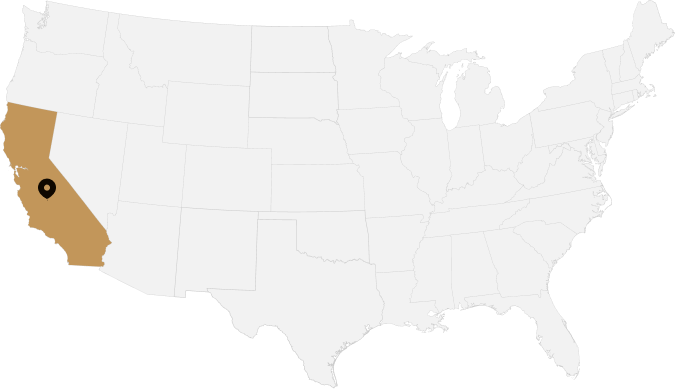
Primary jurisdiction for the lottery theory is California, but our attorneys are licensed to evaluate claims from clients across our Palm Springs, Coachella, Rancho Mirage, Scottsdale, and Las Vegas offices – and beyond. Wherever you bought your spot or repack, call us, and we’ll assess which state’s consumer-protection or unfair-competition statutes fit your facts.
Alina Landver specializes in personal injury and wrongful death cases. Her practice is built on fairness and the belief that every victim deserves a voice against big insurance companies.